
Get to know: Beth Ann Fennelly
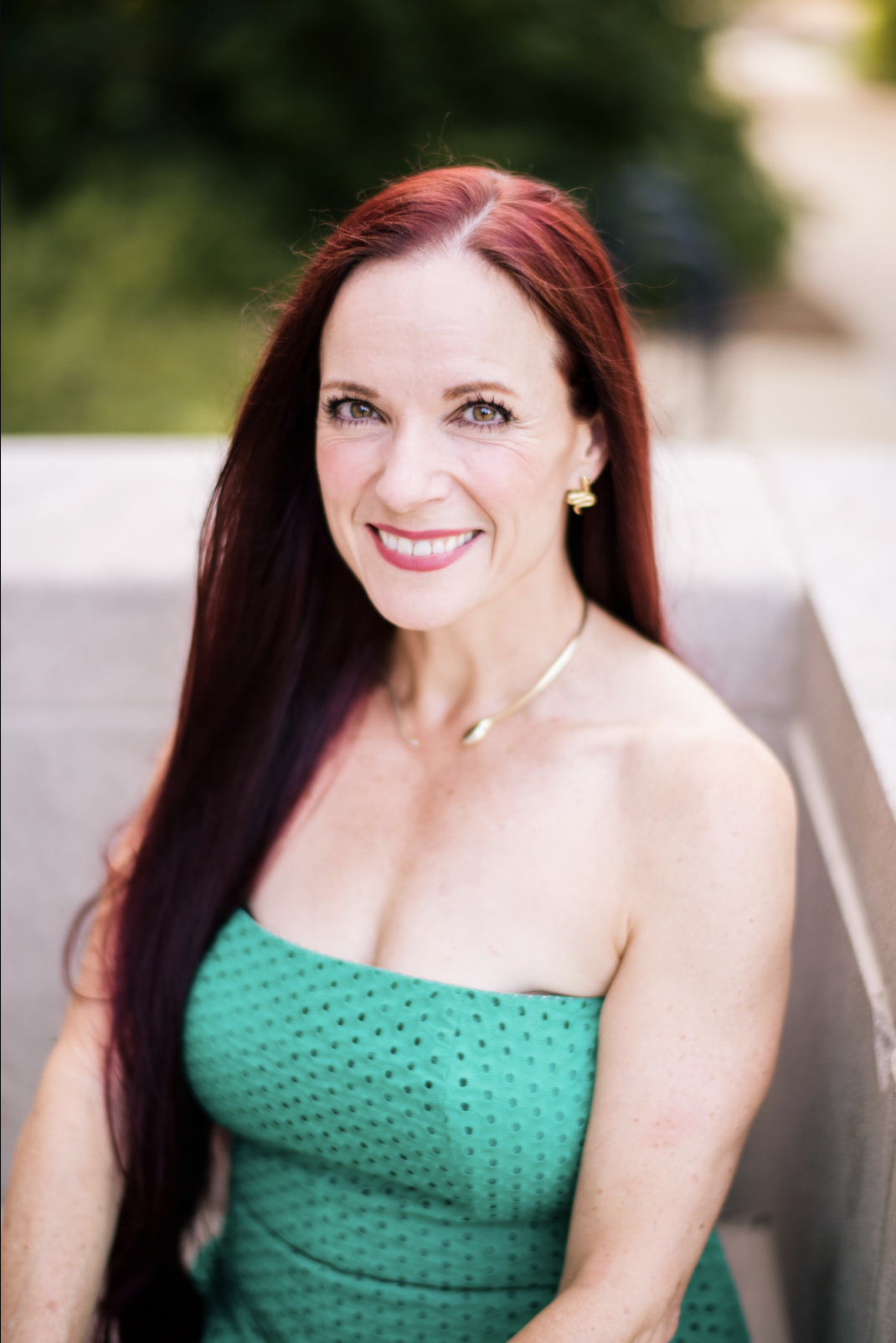
Beth Ann Fennelly, MFA
In Oxford, where literary history lingers in courthouse squares and quiet streets, Beth Ann Fennelly has built a life shaped by language, teaching, and the long journey toward finding one’s voice.
Fennelly’s path to becoming a poet did not begin in a classroom, but in the private, formative rituals of childhood. Growing up in a suburb of Chicago in an Irish Catholic household, she first turned to journaling as a way to process her thoughts. She also found herself drawn to performance, acting in plays that allowed her to inhabit voices beyond her own. But even then, questions of voice, who gets to speak, and how, were quietly taking root.
That question would become central to both her writing and her teaching.
As an undergraduate at the University of Notre Dame, Fennelly enrolled in a creative writing workshop that would change the trajectory of her life. It was there that writing shifted from private practice to public possibility. Encouraged by that experience, she pursued graduate work at the University of Arkansas and continued her studies with postdoctoral work at the University of Wisconsin.
For Fennelly, choosing poetry was not simply an academic decision; it was a commitment to a form that allowed her to “move through her thoughts,” as she describes it. Poetry became both a method of inquiry and a means of self-definition.
Before arriving in Mississippi, she taught in Illinois for two years. Her eventual move south came through a literary twist of fate; her husband, novelist Tom Franklin, was offered the John Grisham Writer-in-Residence Program at the University of Mississippi. The couple relocated to Oxford, a town synonymous with writers, where Fennelly would continue to develop both her own work and the voices of her students.
Today, she teaches courses in Mississippi literature and advanced poetry writing, guiding students through the complexities of craft while encouraging them to locate their own perspectives. If writing is, for her, a way of thinking, teaching is a way of listening. “Being with young people and helping them find their own voices,” she says, remains the most rewarding part of her work in the classroom.
That emphasis on voice is deeply personal. Fennelly’s upbringing in a patriarchal family structure shaped her early experiences with language and expression. Finding her voice was not automatic; it was something she had to claim. Over time, she began to recognize the gaps in her own education, particularly around gender and sexuality, and made a conscious effort to seek out what had been missing.
This process of unlearning, of questioning inherited norms and expanding intellectual frameworks, continues to inform her work. Issues of gender and sexuality are not separate from her writing; they are embedded within it, part of a broader exploration of identity and power. She often thinks about intersectionality and is especially committed to uplifting women writers, whose voices have historically been marginalized or overlooked.
Her latest book, The Irish Goodbye, reflects many of these ongoing concerns. The title itself evokes departure without closure, a quiet slipping away, perhaps not unlike the subtle, internal shifts that define personal transformation. In her poetry, as in her life, leaving and becoming are intertwined.
In Oxford, where past and present literary traditions converge, Fennelly’s work stands as both continuation and intervention. She honors the tradition of Southern storytelling while also expanding it, making space for voices, experiences, and questions that have too often been excluded.
For her students, and for her readers, that may be her greatest contribution: not just the poems themselves, but the permission they offer. Permission to question, to reflect, and most importantly, to speak.